
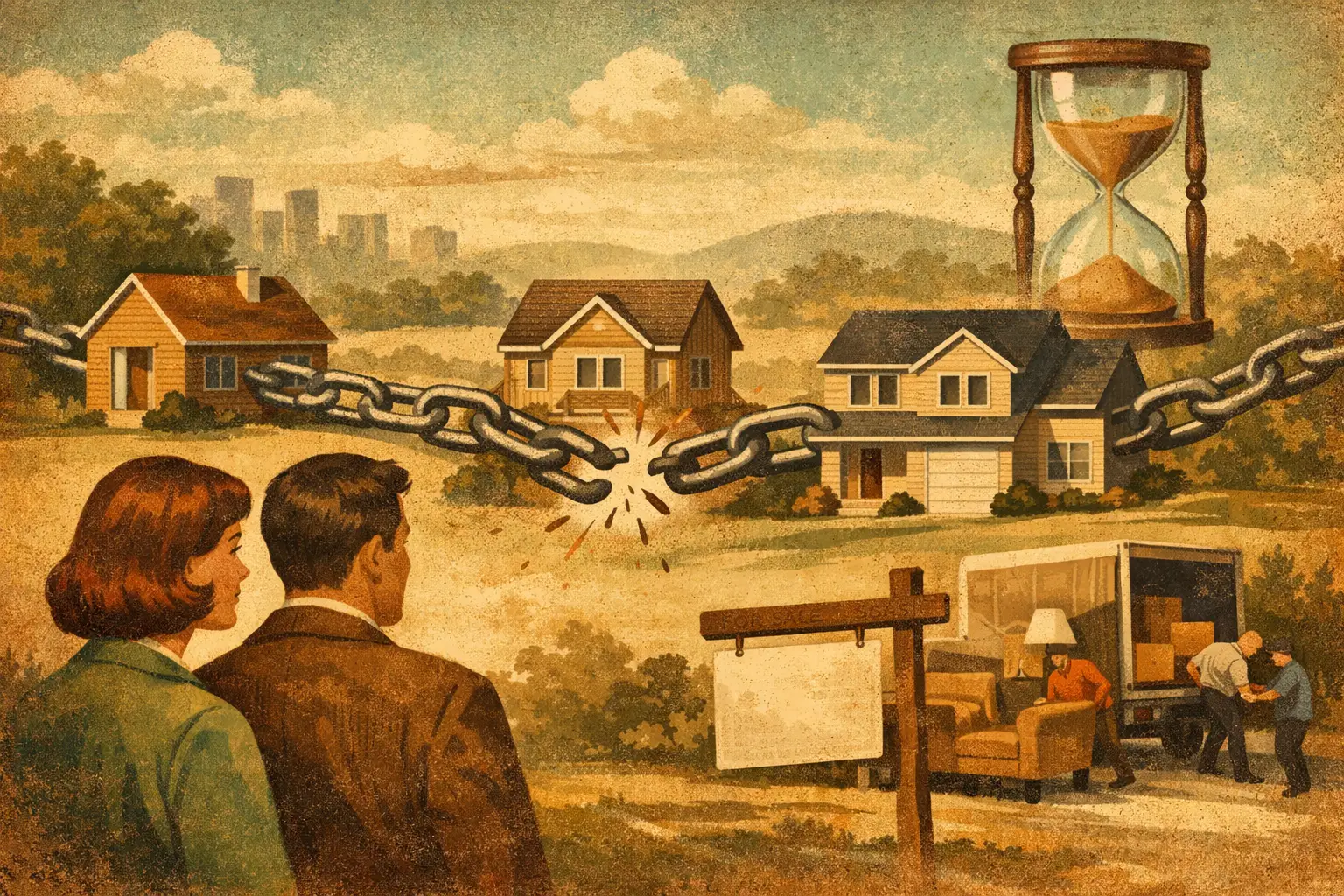
A buyer may love your home, your offer may be accepted and the solicitors may be instructed – yet your move can still be held up by somebody you have never met. To avoid property chain delays, it helps to understand where the pressure points are and decide early how much certainty you need from your sale.
For some sellers, waiting is inconvenient. For others, it can mean mounting mortgage arrears, a missed relocation deadline, an empty inherited property continuing to cost money, or a tenancy situation becoming harder to manage. When time matters, a traditional chain is not always the right fit.
Why property chains cause delays
A property chain is created when each buyer needs to sell a property to fund their next purchase. One problem at any point can affect everyone above and below it. Your buyer may be ready, but their buyer may lose their mortgage offer, pull out after a survey, or simply take too long to find a purchaser.
There is no fixed length for a chain. A straightforward sale can progress in a matter of weeks, while a long or complicated chain can take several months. Even then, completion is not guaranteed until contracts are exchanged.
Delays often happen because one party is waiting for paperwork, finance, survey results or a decision from someone else. Probate, leasehold queries, title issues and missing building regulation certificates can all slow matters down. A buyer changing their mind can stop the process altogether.
This uncertainty is one reason a sale that looks strong at first can become exhausting. You may have packed, arranged removals or made plans around a completion date, only to be told another link in the chain is not ready.
How to avoid property chain delays before you accept an offer
You cannot control every part of a chain, but you can reduce avoidable hold-ups. The key is to get organised before your property goes on the market rather than reacting when a buyer is already waiting.
Know your buyer’s position
Ask your estate agent whether the buyer is chain-free, a cash buyer or dependent on selling another property. If they have a property to sell, find out whether it is under offer, whether surveys have taken place and how long their own chain is.
A higher offer from a buyer at the bottom of a long, uncertain chain may not be the best outcome. A slightly lower offer from a buyer with funding in place and no property to sell can provide greater confidence. The right choice depends on your timescale, financial position and how much risk you can reasonably take.
If a buyer says they are a cash buyer, it is sensible to ask for evidence that the funds are available. Cash can remove mortgage-related delays, but it does not automatically mean the buyer will be quick or committed.
Choose a solicitor early and send information promptly
Instructing a conveyancing solicitor before accepting an offer can save valuable time. They can begin preparing the legal pack and identify questions that may otherwise appear later in the process.
Gather the documents you have for the property, including warranties, planning permissions, building regulations approvals, electrical certificates and any paperwork relating to alterations. If you own a leasehold flat, locate your lease, service charge information and details of the managing agent. Leasehold sales frequently take longer because information is needed from third parties.
Reply to your solicitor’s questions as soon as you can. A delayed form, unsigned document or missed phone call may seem small, but it can leave the whole chain waiting.
Deal with known issues honestly
If there has been a boundary disagreement, Japanese knotweed, damp, subsidence history, an absent landlord or a problem with a tenant, say so at the start. Trying to avoid an awkward conversation rarely makes the issue disappear. It usually appears in a survey, legal search or buyer enquiry, after more time has already been spent.
Being open gives you the chance to seek advice, obtain relevant paperwork or consider a buyer who is comfortable purchasing a property in its current condition. This is particularly useful for inherited homes, empty houses and former rental properties where records may be incomplete.
Keep the chain moving after the offer is accepted
Once you accept an offer, keep in regular contact with your estate agent and solicitor. Ask for clear updates rather than assuming that no news means progress. You should know whether the buyer has applied for their mortgage, booked a survey and received any valuation decision.
It can help to agree a realistic target date early. A target is not a guarantee, but it gives everyone a shared timescale and makes a lack of progress easier to spot. Avoid booking removals or committing to a new purchase until exchange of contracts, unless you can manage the financial risk if dates change.
Common problems that can stall a sale
Some delays cannot be prevented, but early action can make them less damaging. The following issues deserve attention because they often affect both timing and buyer confidence:
- A mortgage valuation that comes in lower than the agreed price, leaving the buyer short of funds.
- Survey findings such as roof repairs, damp, structural movement or outdated electrics that lead to renegotiation.
- Missing title documents, unclear boundaries, restrictions on the property or unregistered land.
- Probate delays where the seller does not yet have the legal authority to sell an inherited property.
- Slow replies from a freeholder or managing agent on a leasehold sale.
- A buyer’s related sale falling through, even after they have made a firm offer on your home.
Not every issue needs to end a sale. A practical buyer may accept a price adjustment, proceed with repairs in mind or agree a revised completion date. However, if you need certainty by a particular date, repeated negotiations can place you in a difficult position.
When a chain-free sale may be the better option
The most reliable way to avoid property chain delays is to sell to a buyer who does not need to sell another home and can work to an agreed timescale. A direct property buyer can offer this route, particularly where the property is difficult to sell through the open market or your circumstances do not allow for months of uncertainty.
This approach will not always achieve the same price you might hope for after a long estate agency marketing period. That is the trade-off. In return, it can offer a clearer process, no viewings, no buyer chain and a faster route to completion where the legal position allows.
For a landlord with a vacant property, a family handling probate, or a homeowner facing financial pressure, that certainty may be worth more than holding out for an offer that depends on several other transactions completing. A direct sale can also be useful if a previous buyer has withdrawn and you do not want to restart the process from the beginning.
Quick Property Sale can discuss a direct purchase and explain other options where a quick sale is not the best answer for your circumstances. A reputable buyer should be clear about their offer, the likely timescale and any conditions before you make a decision.
Questions to ask before relying on a fast sale
Whether you sell through an agent or directly, ask who is buying, how they are funding the purchase and what could change the agreed price or completion date. Ask for the process in plain English. You should also know who will handle the legal work, whether there are fees to pay and what happens if you decide not to proceed.
Be cautious of pressure to sign immediately or promises that sound too good to be true. Speed should not mean confusion. You still deserve time to ask questions and understand the arrangement.
If your sale has a deadline, say so from the first conversation. A buyer who knows you need to complete before a repossession hearing, relocation date or probate expense becomes unmanageable can tell you honestly whether that is realistic.
A property chain does not have to take over your plans. By checking the buyer’s position, preparing your paperwork and choosing a sale route that matches your deadline, you can replace some of the uncertainty with a clear next step – and give yourself more room to move forward.





0 Comments