
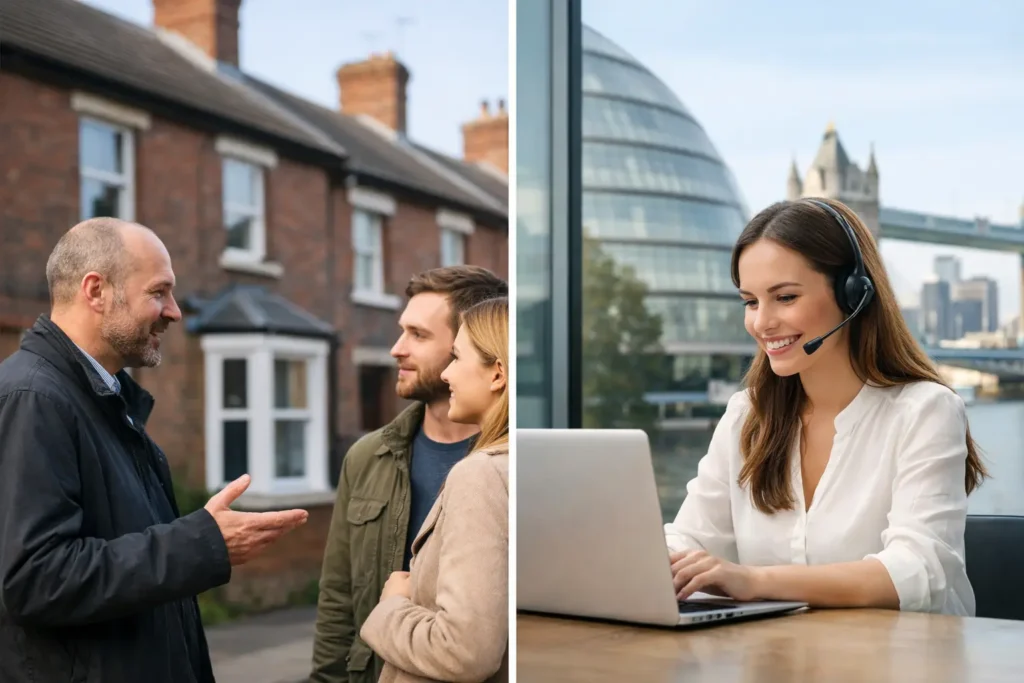
A property that has been sitting empty, a tenancy that is no longer working, or a sale that keeps falling through can make every extra week feel expensive. When weighing up a direct buyer versus online agent, the key question is not simply who can advertise your property. It is which route gives you the right balance of price, speed and certainty for what you need to happen next.
For some sellers, waiting for the best offer on the open market is worthwhile. For others, particularly when there is a deadline, financial pressure or an unwanted property to deal with, a direct sale can remove a great deal of uncertainty. Knowing the difference before you commit can help you regain control.
What an online agent does
An online estate agent markets your property to buyers, usually through the major property portals such as Rightmove or Zoopla. The service may include a valuation, photography, a listing and help arranging viewings. Some packages are paid upfront, while others charge on completion or offer optional extras for accompanied viewings, negotiations and sales progression.
The main attraction is exposure. Your home is placed in front of a broad pool of buyers, which may help you achieve a stronger price than a quick direct offer, especially if the property is in good condition, appropriately priced and in an area with steady demand.
However, an online agent is still an agent. They do not normally buy your property themselves or guarantee that a buyer will proceed. You may receive enquiries and viewings, but the sale depends on finding a suitable buyer, agreeing a price, completing surveys, arranging a mortgage and keeping the chain together.
That can work well when you have time and the property is easy to sell. It can be much harder when a house needs major work, has a sitting tenant, has been inherited, or has already struggled to attract committed buyers.
How a direct buyer works
A direct property buyer purchases your home from you rather than marketing it to someone else. There are no public listings, repeated viewings or months spent waiting to see whether an interested party can secure their mortgage.
After discussing the property and your situation, the buyer assesses factors such as location, condition, title, occupancy and how quickly you need to move. They then make an offer. If it is right for you and the checks are complete, the sale can move to conveyancing straight away.
The major benefit is certainty. A reputable direct buyer has funds or an agreed funding route in place and is not relying on a new buyer appearing. This makes the route particularly useful where time matters, such as a looming repossession date, a job relocation, a probate deadline, a relationship breakdown or an unwanted rental that is costing more than it earns.
The trade-off is price. A direct buyer will usually offer below the full open-market value, sometimes by a significant margin, because they are taking on the cost, risk and responsibility of the property. They may need to carry out repairs, manage a vacant home, deal with tenants or hold the property until it can be resold. A fair offer should be explained clearly, not dressed up with promises that later disappear.
Direct buyer versus online agent: the real differences
The choice often comes down to what you value most at this point in your life.
An online agent may be the better fit if you can wait for the market, your property presents well, and achieving the highest possible sale price is your priority. You should still budget for legal costs, potential agent fees and the practical cost of keeping the property while it is listed. If you are buying another home, remember that your own sale may form part of a chain.
A direct buyer may suit you better if you need a firm route forward rather than an extended marketing process. You know who you are dealing with, there is no need to prepare for open-house viewings, and the transaction is not dependent on a mortgage lender approving a stranger. For landlords, this can be especially helpful when dealing with a poor-performing investment, difficult tenant circumstances or several properties that need to be sold without a drawn-out disposal programme.
Neither choice is automatically right or wrong. Selling through an agent can deliver more money, but it asks you to accept more uncertainty and potentially more delay. Selling directly can mean accepting less than you might achieve on the open market, but it can bring a defined timescale and allow you to move on without the property continuing to dominate your finances or headspace.
Look beyond the headline valuation
A valuation is not money in your bank. The figure an agent suggests may reflect the price they hope to achieve, rather than the price a buyer will actually pay after negotiations, surveys and mortgage valuation checks.
When comparing options, think about the net result and the cost of waiting. If your home is empty, you may be paying council tax, insurance, utilities, maintenance and mortgage payments every month. If it is a rental, there may be letting costs, repairs, arrears or compliance issues. A higher eventual offer can lose some of its advantage if the property takes many months to sell.
It is also worth asking what happens if the first buyer pulls out. In a conventional sale, you may need to start again, relist the property or accept a reduced offer. With a direct buyer, ask how they assess the property, whether the offer is subject to survey or legal checks, and what could cause it to change. Straight answers matter more than fast promises.
Questions to ask before choosing either route
Before signing an agreement, make sure you understand the process in plain English. Ask an online agent whether there is an upfront fee, how long the contract lasts, where the property will be advertised and what support is included after an offer is accepted. A low advertised fee can become less appealing if you are tied into a lengthy agreement or need to pay for each additional service.
If you are considering a direct buyer, ask whether they are buying with their own funds, whether there are any fees for you to pay, and whether you will use an independent solicitor. You should also ask for a realistic completion timescale and a clear explanation of the offer. Do not feel rushed into accepting anything you do not understand.
A trustworthy company will not treat questions as an inconvenience. They should give you space to consider your options, encourage you to take independent legal advice and be honest if another route is likely to serve you better.
When a direct sale can take the pressure off
There are situations where marketing a property is not just inconvenient but emotionally draining. Sorting an inherited house while managing probate can be difficult enough without clearing rooms for viewings and negotiating with several buyers. A separation may require a clean financial break. A property portfolio landlord may be ready to stop putting money into a property that no longer supports their plans.
In these circumstances, speed is not about cutting corners. It is about reducing the number of moving parts. A direct sale can give you a date to work towards, a known buyer and the chance to deal with one decision at a time.
Quick Property Sale is available to discuss your property without pressure, whether a direct offer is the right answer or an open-market sale is likely to make more sense. The aim should be to give you clarity, not to force a decision.
If you are unsure, start with the outcome you need: more money, a fixed timescale, privacy, or freedom from a property that has become a burden. Once that is clear, the right selling route is usually clearer too.