
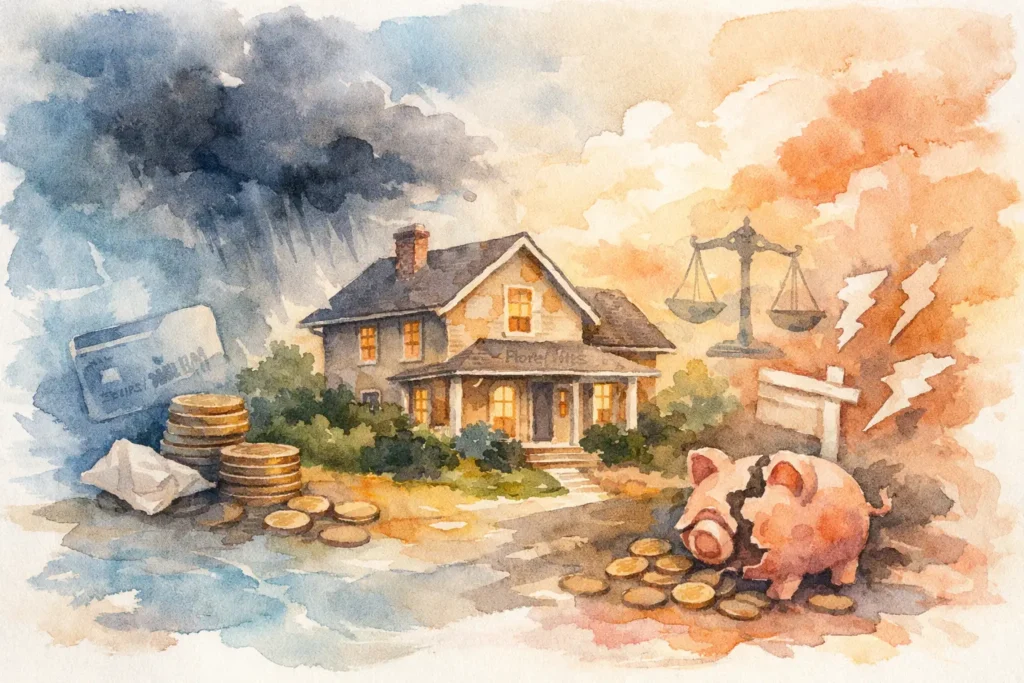
When the letters keep arriving, the lender is calling, and the numbers no longer work, the house can stop feeling like security and start feeling like pressure. If you need to sell your house due to debt, you are not alone - and you are not failing. For many homeowners, selling is the most practical way to clear arrears, avoid the situation getting worse, and create some breathing space.
The hard part is that debt rarely comes on its own. It often sits alongside job loss, separation, rising mortgage costs, poor health, or an inherited property that has become another financial problem to manage. In that position, you do not need a complicated property lesson. You need a clear way forward.
When selling your house due to debt makes sense
Selling a property because of debt is not always the first option, but there are times when it is the right one. If your mortgage arrears are growing, other debts are stacking up, and your monthly outgoings are no longer sustainable, holding on for too long can reduce your choices.
In some cases, the issue is time. You may have enough equity in the property, but not enough cash flow to keep up with payments while waiting months for an estate agent sale. In others, the property itself is part of the problem. It may be empty, in poor condition, hard to mortgage, or simply not attracting buyers at the pace you need.
Selling can make sense if it allows you to clear secured debt, stop arrears from increasing, and avoid further action from lenders or creditors. It can also help if the property is tying up money you need elsewhere, especially after redundancy, divorce, probate, or a failed buy-to-let investment.
That said, it depends on your circumstances. If your debt is temporary and manageable, or if a lender is willing to agree a realistic repayment arrangement, selling may not be your only route. The key is being honest about the gap between what is coming in and what is going out, and how long you can realistically carry that pressure.
Sell your house due to debt or try another option?
This is usually the biggest question. People often assume they have only two choices - keep struggling or sell immediately. In reality, there may be a few routes, but not all of them will suit your timescale.
If your main issue is mortgage arrears, speak to your lender as early as possible. Some lenders will agree a short-term arrangement, particularly if your income problem is temporary. If you have unsecured debts, a debt adviser may help you look at repayment options that take some pressure off your monthly costs.
But there is a difference between having an option on paper and having one that genuinely solves the problem. A repayment plan still needs to be affordable. Refinancing still depends on your credit profile and lender appetite. A traditional sale still needs viewings, chains, surveys, and time.
If you are already behind, worried about repossession, or simply need certainty quickly, a direct sale can be a practical alternative. It will not be right for everyone, and it may mean accepting less than full market value in exchange for speed and convenience. For many people in debt, that trade-off is worth it because it brings a fast end to the stress.
What happens if you wait too long?
Delay is often expensive. Arrears increase, legal fees can be added, and the pressure gets heavier with every missed payment. If the property is empty or tenanted and under performing, you may also be covering council tax, insurance, repairs, or landlord costs while trying to solve a wider debt problem.
There is also the emotional side. When debt drags on, decision-making gets harder. People avoid opening post, put off calls, and hope things will settle down on their own. Sometimes they do not. By the time action is taken, there are fewer choices and less control over the outcome.
Selling before matters reach crisis point can protect more of your equity and give you more say in what happens next. That might mean clearing debts in full, reducing what you owe substantially, or at least avoiding the added costs and disruption that come with court action or repossession proceedings.
How a quick sale works when you need to sell house due to debt
A fast property sale is usually much simpler than the open market. Instead of listing the home, waiting for interest, and dealing with buyer uncertainty, the process is centred on assessing your situation and making a direct offer based on the property, location, condition, and your timescale.
That can be especially helpful if the house needs work, has tenants in place, has been sitting empty, or has already failed to sell through an estate agent. In debt situations, certainty matters as much as price. An offer that can actually complete is often more useful than a higher number that may collapse later.
The process should be straightforward. You explain the property and the urgency. The buyer reviews the details and gives you a clear indication of what may be possible. If the offer works for you, the sale moves forward without the usual chain-related delays.
A company such as Quick Property Sale will usually discuss your position openly and help you understand whether a direct sale is the best fit or whether another route may serve you better. That kind of clarity can be a relief when everything has felt uncertain for weeks or months.
What about the sale price?
This is where realism matters. If you sell quickly to a cash buying company, you will usually receive less than you might achieve on the open market. That is the trade-off for speed, convenience, and a more predictable sale.
But open market value is not always the right comparison. If your property needs repairs, has legal complications, is difficult to finance, or you simply do not have months to spare, the theoretical best price may not be available to you in practice. A delayed sale can also cost you money through additional arrears, monthly bills, legal fees, and the wider strain of staying in a difficult position.
The better question is not always, “What is the highest possible price?” It is often, “What option leaves me in the strongest position overall?” For someone facing debt pressure, a lower but reliable offer can sometimes produce the better outcome.
Steps to take before you decide
Start by getting clear on the numbers. You need to know what you owe on the mortgage, whether there are arrears, what other secured debts exist against the property, and roughly how much equity may be left after sale costs. Without that, it is difficult to judge your options properly.
Then look at your timescale. If creditors are escalating matters or a lender is moving towards legal action, speed may need to take priority. If you have a bit more room, you may be able to explore more than one route before deciding.
It also helps to be honest about the property itself. If it is in strong condition in a popular area, an estate agent sale may still be workable. If it needs major work, has problem tenants, title issues, or has already sat unsold, a direct buyer may be more realistic.
Most importantly, do not make the decision in isolation if you can avoid it. Ask questions. Get figures. Understand the likely outcome of each route. Pressure tends to lift once the situation becomes concrete rather than frighteningly vague.
The emotional side of selling under pressure
People often feel embarrassed about debt, especially when property is involved. They worry they should have managed better, waited less, earned more, fixed things sooner. That self-blame can keep people stuck.
The truth is that debt problems are often driven by life events as much as bad decisions. Relationships end. Interest rates rise. Jobs disappear. Tenants stop paying. Family responsibilities change. A house that once felt affordable can become too heavy to carry.
Selling is not giving up. Sometimes it is the most responsible step available. It is a way to stop the damage, protect what equity remains, and give yourself a chance to reset.
If that is where you are, focus on progress rather than pride. The right decision is the one that reduces pressure, protects your position, and helps you move on with confidence. A calm, honest conversation about your options can be the start of that change.