
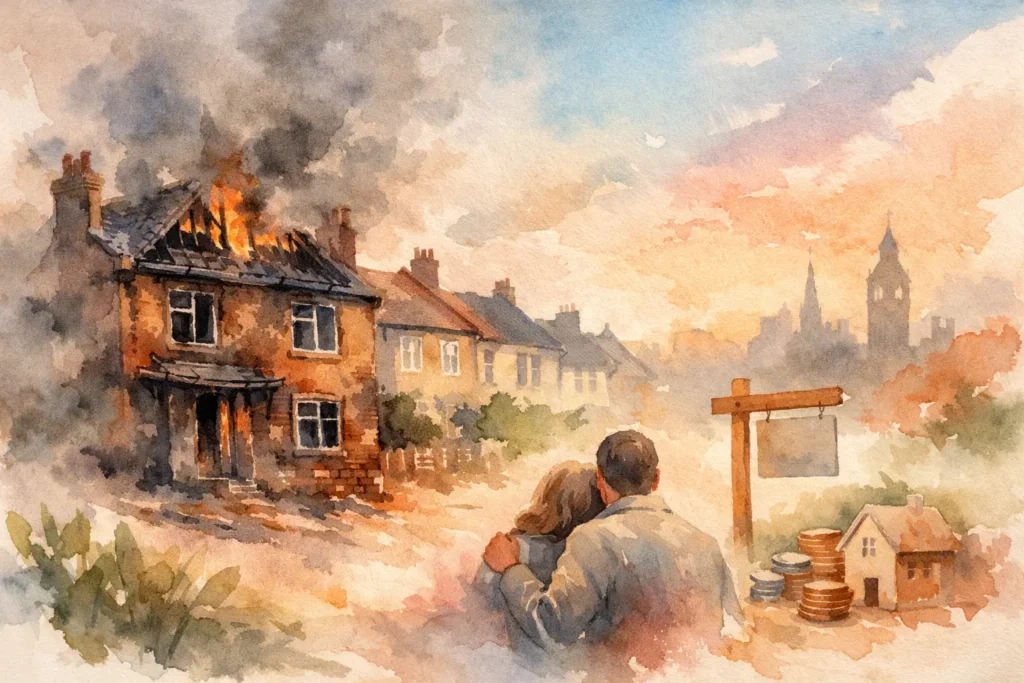
The smell of smoke, the damage you can see and the uncertainty over what happens next can make a property feel impossible to deal with. If you need to sell fire damaged house property quickly, the good news is that a sale is still possible. You do not necessarily need to complete every repair, wait for an insurer to finish every step, or spend months hoping a buyer will take it on.
What makes sense depends on the severity of the fire, your insurance position, the property’s location and how quickly you need the situation resolved. For some owners, restoring the home before selling is worthwhile. For others, particularly where there is financial pressure or an empty property to secure, selling in its current condition can provide a clearer way forward.
Can you sell a fire damaged house in the UK?
Yes. A fire-damaged home can be sold, including a house with smoke damage, fire damage to one room, a damaged roof, or more substantial structural issues. The key is to be open about the property’s condition with prospective buyers and solicitors.
A conventional buyer may be put off by the cost, disruption and uncertainty of repairs. Mortgage lenders can also be cautious if a property is not habitable or cannot be properly insured. That can reduce the number of buyers able to proceed and make an estate agent sale slower than expected.
Cash buyers, developers and specialist property buyers are often better placed to assess the building as it stands. They will factor repair costs and risk into their offer, but they are not waiting for a mortgage valuation or looking for a move-in-ready family home.
Your options after fire damage
How to Sell Fire Damaged House Quickly
There is no single right route. The best option is the one that gives you enough certainty for your circumstances, not simply the highest figure on paper.
Restore the property before putting it on the market
If the damage is limited and your buildings insurance will cover repairs, reinstating the property may help you achieve a stronger open-market price. This can be a sensible approach where you have time, the home is in a desirable area and the repairs are professionally managed.
However, repairs often take longer than expected. Smoke can travel beyond the room where the fire started, affecting plaster, wiring, insulation, flooring and ventilation. A buyer may still ask questions about the incident, even once the work is complete. You will also need to manage contractors, temporary security and ongoing bills while the work is under way.
Sell through an estate agent as a renovation project
Some buyers actively look for projects. If the structure is sound and the damage is clearly documented, an estate agent may market the property to investors or builders.
This route can produce a competitive price, but it is rarely quick or guaranteed. Viewings may be limited, buyers may renegotiate after surveys, and chains can collapse. It also usually involves presentation, marketing and a period of uncertainty - all of which can feel overwhelming after a fire.
Sell the house in its current condition
A direct cash sale can be a practical option when you do not want to fund repairs or wait for the usual sales process. The buyer assesses the condition, makes an offer based on the work required and, if you accept, works towards a timescale that suits you.
The trade-off is straightforward: an as-is offer will reflect the cost of repairs, the risk involved and the buyer’s need to make the project viable. In return, you may avoid the expense of restoring the home, repeated viewings and the uncertainty of a buyer relying on finance. For many people, that certainty has real value.
Insurance: what to clarify before you sell
If you have made a buildings insurance claim, do not assume you need to wait until it is fully settled before considering a sale. But the claim, policy terms and any payment entitlement need to be handled carefully.
Speak to your insurer and solicitor early. Find out whether the policy can be transferred, whether the insurer intends to pay for reinstatement, and who is entitled to any remaining settlement funds if ownership changes. The answer can vary considerably depending on the policy and the stage of the claim.
Keep copies of your insurance correspondence, fire service report if available, repair estimates, surveys and photographs. These documents help a serious buyer understand the extent of the damage and can prevent confusion later in the process. Being clear from the outset is usually the quickest way to keep a sale moving.
What affects the value of a fire-damaged property?
It is understandable to worry that a fire means your home has lost all of its value. That is rarely the case. The value will depend on the property beneath the damage, the scope of work required and the local market.
Minor kitchen fire damage is very different from a fire that has affected load-bearing walls, roof timbers or electrical systems. A vacant Victorian terrace in need of complete reinstatement will be assessed differently from a modern flat where smoke damage is contained. Location, plot size, demand from investors and the likely resale value after works all matter too.
Buyers will also consider practical costs that are easy to overlook: clearing damaged contents, asbestos surveys where relevant, specialist smoke remediation, rewiring, building control requirements and securing an empty home. A credible offer should take account of the full picture rather than focusing only on visible damage.
Steps to take before you sell
First, make the property safe. Do not enter an unsafe building or attempt to remove damaged materials without professional advice. If the home is empty, make sure it is secure against weather, trespass and further damage.
Next, gather the essential information. This includes your title documents, insurance details, photographs from before and after the fire, any contractor reports and a clear record of what has happened. You do not need to have every answer immediately, but honest information allows buyers to make realistic decisions.
It can also help to obtain an idea of repair costs, even if you do not intend to carry out the work. One or two estimates can show whether restoration is financially sensible or likely to become an expensive, drawn-out commitment.
Finally, compare offers and routes on more than price alone. Ask how the buyer is funding the purchase, whether they will reduce their offer after surveys, who pays the legal costs, and how long completion is likely to take. A higher offer is not always the better outcome if it comes with a long chain and a high risk of falling through.
A quicker, more private way to move on
When a fire has disrupted your home or investment property, you may need more than a standard sales valuation. You may need a clear answer, a realistic timescale and somebody willing to discuss the situation without pressure.
Quick Property Sale can consider fire-damaged properties across Great Britain and discuss a direct purchase based on the home’s condition and your circumstances. There is no need to decorate, arrange open days or wait for a buyer to secure a mortgage. If a direct sale is not the best fit, knowing that early can save you time and worry.
A fire can leave a property looking like another problem to solve. It does not have to hold up your next step. With the right information and a sale route that reflects your priorities, you can deal with the house and focus on moving forward.