
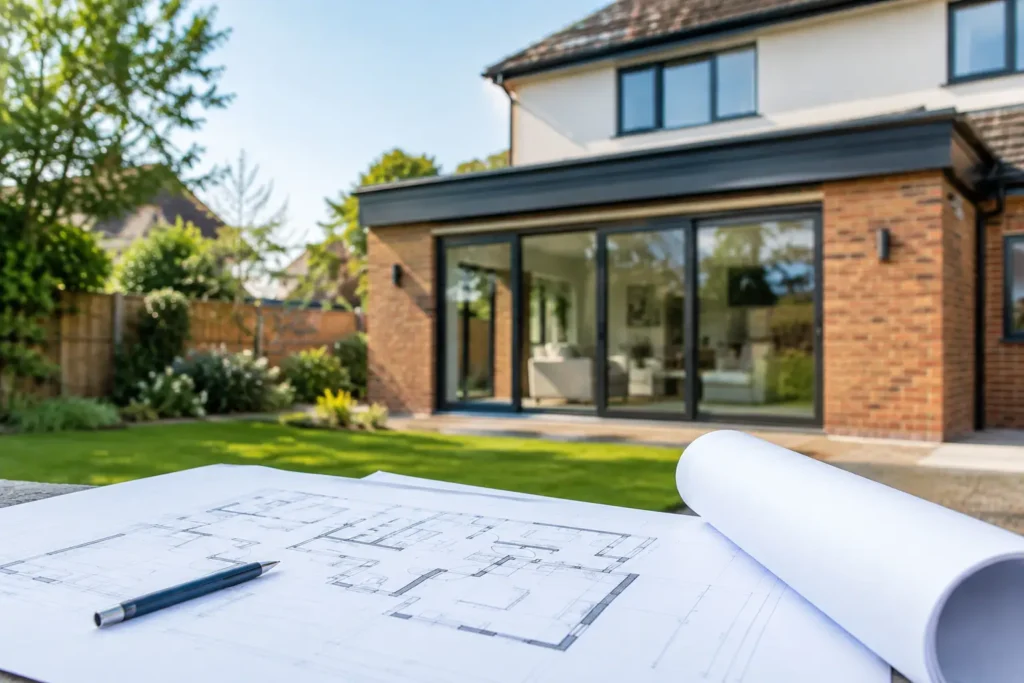
A half-finished extension, an old refusal letter or uncertainty over the paperwork can make an already difficult house sale feel even more complicated. A planning application for a property extension may add value and useful space in the right circumstances, but it can also affect your timescale, budget and the way buyers view the property.
If you are weighing up an extension while dealing with a move, an inherited home or an underperforming rental, the key question is not simply whether you can get permission. It is whether the work makes sense for your situation and whether it will help you move forward.
Do you need a planning application for a property extension?
Not every extension needs full planning permission. Many modest rear and side extensions can be carried out under permitted development rights, provided they meet strict rules on size, height, position, materials and use. These rights can be useful, but they are not automatic in every case.
Flats, maisonettes and listed buildings do not normally have the same permitted development rights as houses. The rules may also be restricted in conservation areas, national parks and other designated locations. A previous planning condition on the property can remove rights too.
That is why assumptions can be expensive. An extension that looks similar to one next door may have very different planning requirements because of the property’s location, history or boundary position.
Permitted development is not the same as no paperwork
Even where an extension falls within permitted development, a lawful development certificate can provide useful evidence that the work was legal. You are not always required to obtain one before building, but it can prevent questions later if you decide to sell.
Buyers and their solicitors often want reassurance that additions to the house were properly authorised. Having clear documents available can avoid delays just when you need a sale to progress.
Planning permission and building regulations are separate
Planning permission deals with whether the development is acceptable in that location. Building regulations deal with how it is built, including structural safety, insulation, drainage, fire safety and ventilation.
You may need building regulations approval even if planning permission is not required. Conversely, receiving planning consent does not give you approval to start building without meeting building control requirements. Keeping approvals, drawings, completion certificates and guarantees together is sensible from day one.
What the application process usually involves
A full planning application is submitted to the local planning authority. The application normally includes scaled plans, a site location plan, a description of the proposal and the relevant fee. Depending on the project, you may also need design details, drainage information, ecological reports or a heritage statement.
The council validates the application before it is considered. It will usually notify neighbours and may consult bodies such as highways, conservation or environmental health officers. Neighbour objections do not automatically mean an application will fail, but concerns about overlooking, loss of light, parking, design and impact on the street can influence the outcome.
For a straightforward householder application, a decision commonly takes around eight weeks from validation. Real life can take longer. Missing documents, requested amendments, busy planning departments and more complex site issues can all extend the process.
If permission is refused, you may be able to amend the design and apply again or appeal the decision. Neither route is guaranteed, and both add time. For someone who needs to release money from a property quickly, that delay may matter more than the potential benefit of a larger extension.
Costs to plan for before you begin
The council’s planning fee is only one part of the cost. Plans prepared by an architect or architectural technician, structural calculations, surveys, building control charges and contractor costs can quickly add up.
A simple single-storey extension may need far less specialist input than a project involving a party wall, protected trees, difficult drainage or a listed building. There can also be costs after approval, particularly if the council attaches conditions requiring materials to be agreed or landscaping work to be completed.
It is worth setting a realistic contingency. Building work has a habit of exposing issues that were not visible at the start, from damp and drainage problems to poor previous alterations. An extension that stretches your finances can create more pressure than it removes.

How an extension can affect a property sale
An approved extension can make a home more appealing, especially where it creates a practical kitchen-diner, an extra bedroom or better family living space. But planning permission alone does not guarantee a higher sale price. Buyers look at the finished quality, local demand, layout and whether the asking price reflects comparable homes nearby.
For landlords, the calculation can be different. Spending money to enlarge a rental property may not be worthwhile if the tenancy position is difficult, the rental return is poor or the property portfolio needs to be simplified. The best decision depends on your cash position and how soon you need to sell.
If permission has been granted but work has not started
Valid planning permission can be a selling point, particularly for buyers who want to improve the house themselves. Keep the decision notice, approved plans and any correspondence safely together. Be clear about the expiry date and conditions attached to the consent.
Do not present permission as a guaranteed increase in value. Some buyers will welcome the opportunity; others will see building work as another job to take on. A realistic price and clear paperwork are usually more persuasive than ambitious claims about what could be built.
If the extension is underway
Selling during building work is possible, but it narrows the pool of buyers. Some will be put off by disruption and the uncertainty of completing a project, while experienced renovators may see potential. The property should be described honestly, including what has been completed, what remains and which approvals are in place.
Stopping works midway can also leave the property exposed to weather or security issues. Before pausing a project, get practical advice from the contractor and make the site safe.

If the work was done without the right consent
Unapproved work should not be ignored. Depending on the age and nature of the extension, there may be options such as applying for retrospective planning permission or seeking a lawful development certificate. Building regulations issues may require separate regularisation.
Neither option should be treated as a formality. Retrospective permission can be refused, and a buyer’s solicitor may still need further evidence. Being open early gives you more choices than discovering a problem after a buyer has been found.
Should you apply for permission or sell as it stands?
If you need to sell quickly because of debt, probate, relocation, separation or a difficult rental, it may be better to avoid taking on a major project. A planning application does not create an instant sale, and an extension can tie up money for months before any benefit is realised.
On the other hand, applying for permission may be sensible if you are not under time pressure, the property has clear potential and the likely improvement suits local buyer demand. A carefully designed proposal can give a future buyer confidence without forcing you to fund the work yourself.
Before deciding, assess four things: how quickly you need the money, what the project will truly cost, whether the property is likely to gain enough value, and how much uncertainty you can reasonably carry. It is often better to choose a clear route than to start work simply because it seems like the expected thing to do.
If the property has become a burden and you would rather sell it in its current condition, Quick Property Sale can discuss a direct sale and your wider options without pressure. Whether an extension is approved, incomplete or never started, clear information gives you a stronger footing.
Keep every plan, consent, certificate, invoice and guarantee in one place. It may not change every buyer’s mind, but it can turn a worrying question into a straightforward answer and help you move on with more confidence.
What documents do you need for an extension?
If your extension needs full planning permission, your application will usually include an application form, a location plan showing the site, a site or block plan, existing and proposed floor plans and elevations, and the fee. In some areas, such as conservation areas, you may also need a design and access statement or a heritage statement. Your council’s validation checklist lists exactly what it wants, so check it before you send anything.
Many single-storey rear extensions fall under permitted development rights, which means you may not need full planning permission. Even then, a Lawful Development Certificate is worth getting, as it proves the extension was allowed and keeps future buyers’ solicitors happy.
Building regulations are a separate step
Planning permission and building regulations approval are two different things, a bit like having permission to throw a party and passing the fire safety check. Almost every extension needs building regulations sign-off. When you sell, buyers will ask for both, so keep the completion certificate safe. If paperwork is missing, your solicitor may suggest indemnity insurance or a regularisation application.
Frequently asked questions
What documents are needed for a planning application?
Usually an application form, location plan, site plan, existing and proposed drawings and the fee. Some areas need extra statements.
Do I always need planning permission for an extension?
No. Many smaller extensions fall under permitted development, though a Lawful Development Certificate is recommended.
Is building regulations approval the same as planning permission?
No. They are separate, and most extensions need building regulations sign-off even without planning permission.
What if my extension paperwork is missing when I sell?
Your solicitor may suggest indemnity insurance or a regularisation application with the council.