
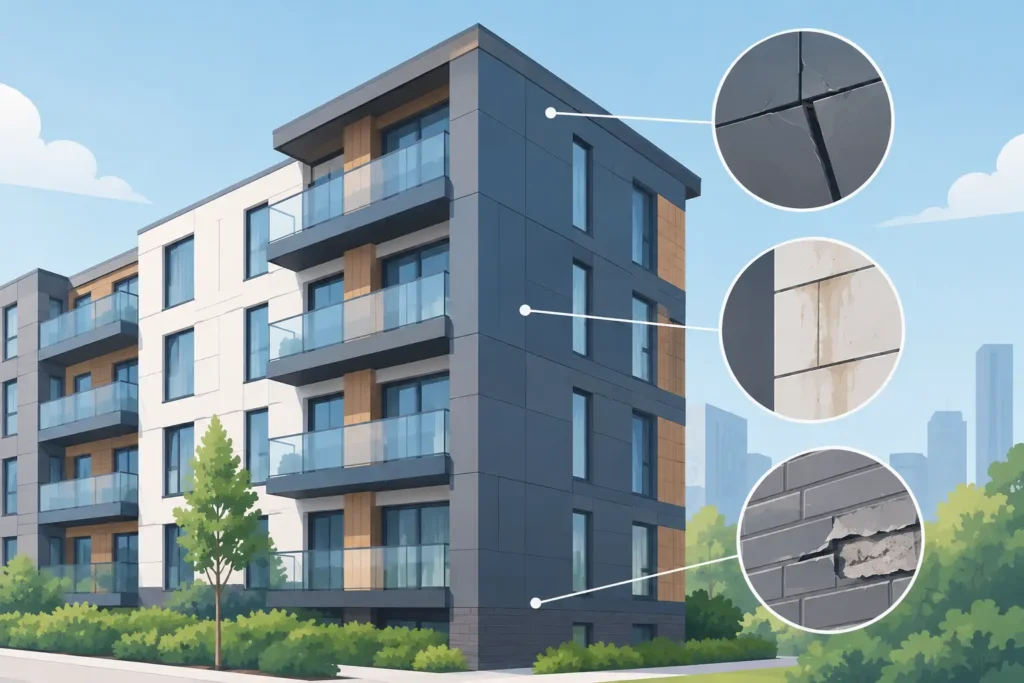
A flat can look perfectly saleable on the surface, yet cladding issues in the block of flats may stop a buyer getting a mortgage, cause a sale to fall through late on, or leave you facing costs and uncertainty you did not expect. For leaseholders, accidental landlords and executors dealing with an inherited flat, this can make an already difficult sale feel impossible.
The good news is that cladding concerns do not automatically mean you cannot sell. They do mean that you need clear information before putting the property on the market or committing to a buyer. The right route depends on the building, the paperwork available, the urgency of your sale and whether you need certainty more than a lengthy open-market process.
Why cladding problems affect flat sales
Since the ‘Grenfell Tower‘ tragedy, lenders, surveyors and buyers have taken far greater care over the external walls and fire safety of blocks of flats. The concern is not limited to visible aluminium composite material. It can involve other types of cladding, insulation, balconies, timber features, voids, cavity barriers and the wider construction of the external wall system.
A buyer using a mortgage needs their lender to be satisfied that the flat is suitable security for the loan. If questions are raised about the building’s fire risk or remediation work, the lender may ask for more evidence, reduce the amount it will lend, or decline the application altogether. A cash buyer may still proceed, but will usually want to understand the risk and reflect it in their offer.
This is why a sale can stall even where the individual flat is well kept, sensibly priced and in a popular location. The issue belongs to the building, but the consequences can fall heavily on each leaseholder.
Common cladding issues in blocks of flats
Not every block has the same problem, and it is risky to assume that a building is safe or unsafe based on its height alone. Some lower-rise blocks have faced lender questions, while many taller buildings have documentation that allows sales to progress.
The most common issue is missing or unsatisfactory evidence about the external wall system. An EWS1 form is often requested by lenders, although it is not a legal requirement for every building or every transaction. It is an assessment completed by an appropriately qualified professional to help lenders understand fire safety risks connected with the external walls.
An EWS1 rating can have a major effect on your options. Some ratings indicate that no remedial work is needed. Others show that work is required, which can make a mortgage harder to obtain until the situation is resolved. Even where work has been identified, the practical questions remain: who is paying, when will it start, and how long will the building be affected?
Other issues that regularly concern buyers include waking watch costs, higher buildings insurance premiums, major works bills, difficulties obtaining a share of freehold or management company information, and uncertainty about whether government funding or developer remediation will cover the work. These are not minor details. They affect the ongoing cost and liveability of the flat, so a cautious buyer will ask about them.
The documents to gather before you sell
Before accepting an estate agent valuation or agreeing terms with a buyer, ask the managing agent, freeholder or residents’ management company for the latest available information. Getting this together early can prevent weeks of back-and-forth once a buyer’s solicitor starts raising enquiries.
You may need the EWS1 form if one exists, the most recent fire risk assessment, details of planned or completed remediation, service charge accounts, buildings insurance information and any Section 20 consultation notices. Section 20 notices are especially significant because they can warn leaseholders of substantial proposed expenditure.
Also ask whether there are any current restrictions on sales, lettings or remortgages within the block. If a remediation scheme is underway, request a realistic timetable rather than relying on a broad assurance that work is being dealt with. Delays are common, and a buyer needs to know what they are taking on.
Your solicitor can help you understand the legal paperwork, but they cannot create documents that the freeholder or managing agent has not supplied. Starting early gives you more control over the process.
Be open with prospective buyers
It can be tempting to avoid raising cladding until someone makes an offer. That approach often creates a worse outcome. Once a surveyor or solicitor identifies the issue, a buyer may feel misled and withdraw, even if the problem was manageable.
Clear, factual disclosure helps attract buyers who understand the position. Explain what is known, what work is planned, who is responsible for costs and what information is still awaited. Avoid guessing about funding or completion dates. Honest uncertainty is better than a promise that cannot be supported.
Who pays for cladding remediation?
The answer depends on the building and its circumstances. Protections introduced through the Building Safety Act 2022 may limit what qualifying leaseholders can be charged for certain historical building safety defects in some buildings. However, eligibility, ownership history, building height, the identity of the landlord and the nature of the work all matter.
Some developers and freeholders have committed to fund repairs on buildings they developed. Other blocks may be covered by a remediation scheme, insurance claim or warranty claim. In some cases, leaseholders still face costs that are not covered, particularly for work outside the scope of available protections or for wider maintenance issues discovered at the same time.
Do not assume that a statement saying a building is “in a scheme” means you have no financial exposure. Ask for written confirmation of what is funded, any expected contribution from leaseholders, and whether service charge demands could arise before the work is complete.
For landlords, this assessment should include the effect on rental income. Major works can make a flat harder to let, while increased service charges can turn a modestly profitable investment into a financial burden. If you own several flats in affected blocks, the pressure can build quickly.
Your options if a normal sale is delayed
If you have time and the building has a satisfactory EWS1 or clear remediation plan, selling through the usual route may still be the best way to seek the strongest price. You should expect more buyer questions and potentially a longer conveyancing process, but a sale can be achievable.
If the paperwork is incomplete, a lender will not support the buyer, or you need to sell by a particular date, waiting may not be realistic. This is often the position for someone handling probate, relocating for work, managing debt concerns or trying to exit an unwanted buy-to-let.
A cash buyer may be able to consider a flat that mortgage buyers cannot. That does not remove the need for sensible checks, and any offer should reflect the building’s condition, outstanding liabilities and market position. But it can reduce the risk of a chain collapsing because a lender changes its view late in the process.
Quick Property Sale can discuss a direct purchase for difficult flats and explain whether it is likely to be a workable option. There is no benefit in pretending every property can be bought quickly at full open-market value. A straightforward assessment should set out the likely timescale, the information needed and any factors affecting the offer, so you can decide what works for you.
Questions worth asking before you commit
When cladding is involved, the most useful question is not simply, “Can I sell?” It is, “What will a buyer need to see in order to proceed?” Your managing agent should be able to confirm the current position of the building, while your solicitor can identify which details need to be disclosed.
Ask whether remediation has been signed off, whether the building’s insurance has changed, whether leaseholders have received recent demands, and whether any tribunal or dispute is ongoing. If you are selling an inherited flat, check the records carefully rather than relying on incomplete paperwork left by the previous owner.
A sale with cladding uncertainty can take patience, but you do not have to remain stuck while you wait for answers. Getting the facts in writing and choosing a sale route that matches your timescale can give you a clearer way to move forward.